
TL;DR: If your business is bulk IT hardware — server CPUs, RDIMM memory modules, enterprise SSDs, network transceivers — Dongguan and the wider Pearl River Delta are where wholesale buyers actually win. The region combines ready-stock inventories, weekly restock cycles, factory-level testing, and tiered volume pricing that Yiwu’s trading-stall model can’t match. Yiwu still works for mixed-commodity containers and low-value filler goods, but the moment your purchase order involves traceable serials, warranty terms, and pallet-level consolidation, Dongguan is the stronger sourcing base.
Wholesale buyers of IT hardware face a recurring question when planning a China sourcing trip or appointing a purchasing agent: should the buying office sit in Yiwu, with its famous trade city and mixed-container convenience, or in Dongguan, the manufacturing heart of Guangdong? Both cities move enormous volumes of electronics, but they serve fundamentally different buyer profiles. This guide breaks the comparison down through the lens that matters to integrators, resellers, and datacenter procurement teams: ready stock availability, packaging formats, quality grading, RMA terms, and how pricing scales with order size.
1. Two Cities, Two Wholesale Models
Yiwu operates as a distribution marketplace. Thousands of stalls aggregate merchandise from factories across China and resell it to export buyers. That aggregation is a genuine strength — a single container can mix toys, tools, cables, and consumer gadgets from dozens of suppliers. For general trading companies stuffing mixed containers, Yiwu is hard to beat.
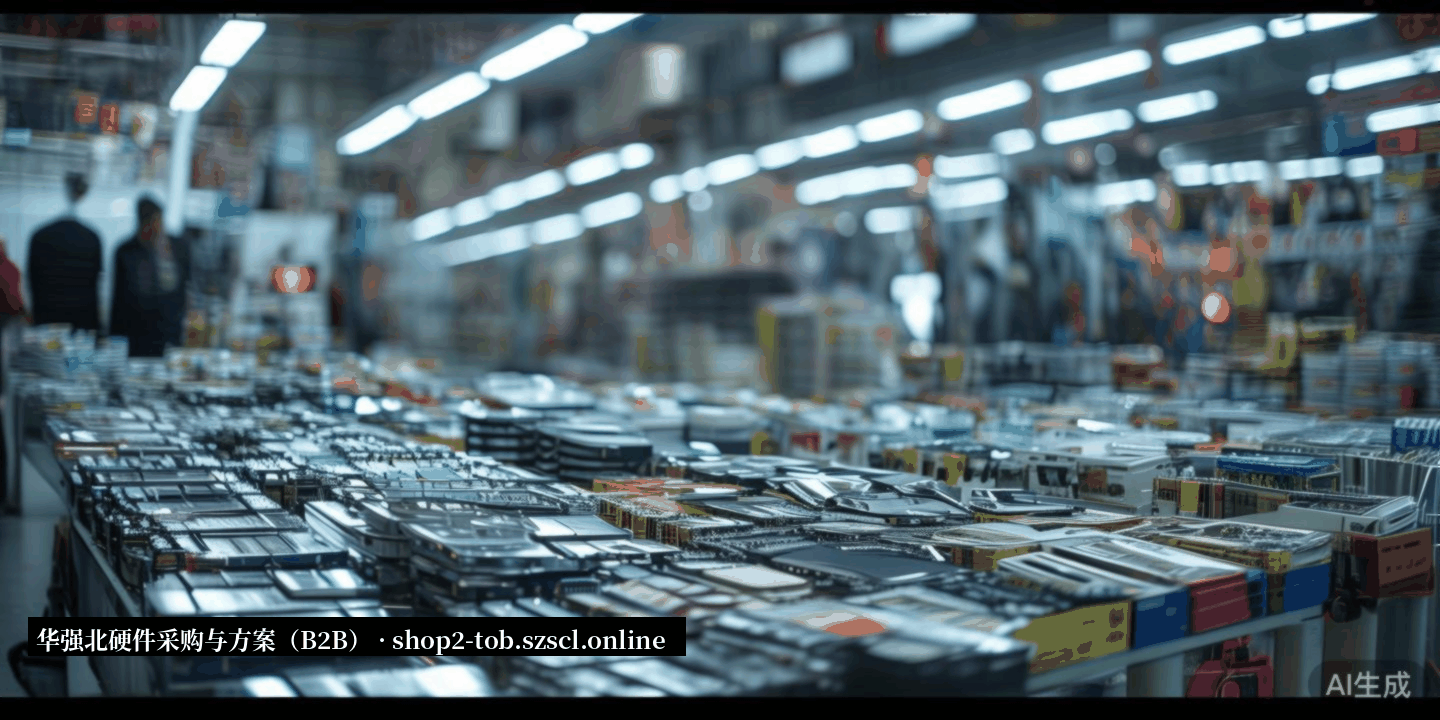
Dongguan operates as a manufacturing and component ecosystem. The city sits at the center of the Pearl River Delta electronics corridor, with specialized clusters across its towns and immediate neighbors: precision tooling in Chang’an, large-scale contract manufacturing throughout the delta, and Shenzhen’s component markets — including Huaqiangbei — within an hour’s drive. The Songshan Lake campus of a major telecom equipment maker has further concentrated component suppliers, engineers, and ODM resources in the area. For IT hardware buyers, this means the trays of Xeon CPUs, the RDIMM sticks, and the QSFP transceivers you purchase are never far from the warehouse, test bench, or upstream distributor that supplied them.
- Yiwu strength: mixed-commodity consolidation, low per-order complexity, fast container loading.
- Dongguan strength: component-level depth, traceable stock, engineering-adjacent quality control, direct factory and authorized-distributor channels.
2. Ready Stock and Weekly Restock: Who Can Actually Fill Your PO?
Bulk IT-hardware buyers rarely buy once. You need repeatable supply: 200 units this month, 500 next quarter, with consistent grading and pricing. This is where the two markets diverge sharply.
Yiwu traders typically resell whatever passes through their hands. A lot of memory modules available this week may be gone next week, replaced by a different brand, grade, or packaging format. Restocking reliability depends on the trader’s upstream relationships, which are often opaque even to the trader.
Dongguan and delta-based stockists build their business on recurring supply contracts. Wholesale inventories of server processors, DDR4 and DDR5 registered memory, enterprise drives, and optical transceivers are tracked by part number and weekly restock cycles, so a buyer can plan quarterly demand against predictable availability. Browse current bulk listings in the wholesale catalog to see how part-numbered, quantity-tiered stock is presented to buyers.
3. Packaging Formats: Tray, Reel, and Bulk vs Retail Boxes
Experienced wholesale buyers know that packaging tells you where the goods came from — and what they’re worth.
- Tray-packed CPUs come from OEM channel pull-outs or distributor overstock. No retail box, no bundled cooler, but typically verifiable serials and lower unit cost. Ideal for server builders.
- Reel-packed components and transceivers indicate original factory packaging and support automated handling — a signal of genuine factory-channel goods.
- Retail-boxed units suit resellers serving end customers, but carry a price premium that bulk buyers usually don’t need.
In Dongguan, tray and reel formats dominate because goods flow directly from factory and distributor channels. In Yiwu, mixed lots frequently combine retail pulls, repackaged units, and leftover stock, making packaging consistency across a large order difficult to guarantee. If your downstream customers — integrators, ISPs, datacenter operators — expect uniform packaging, the delta supply chain is the safer bet.
4. Quality Grades and Testing: Where the Gap Widens
IT hardware is sold in grades: brand-new sealed, pull-out tested, refurbished, and scrap-for-parts. Transparent grading is standard practice among delta-based wholesalers; in a trading-market environment, grade labels can drift between “new pull” and “refurbished” depending on who is asking.
A credible wholesale supplier in the Dongguan area will offer, as a baseline:
- Serial-number and part-number verification against original manufacturer databases.
- Bench testing of sampled units — POST verification for CPUs, full capacity and health checks for SSDs and HDDs, memory testing under sustained load.
- Batch photos and inspection videos before shipment.
- Declared grade on the proforma invoice, not just in the chat thread.
Because the test benches, upstream distributors, and even manufacturer service centers are all within the same industrial region, problems discovered at incoming inspection can be escalated and resolved in days rather than weeks. In a trading market several hundred kilometers from the source, a defective batch usually ends in a negotiation, not a repair.
5. RMA and Warranty Terms: The Clause That Decides the Relationship
Bulk buyers live and die by warranty terms. A 1.5% defect allowance with replacement credit is a very different commercial proposition from “all sales final, tested before shipment.”
Established delta-based wholesalers of IT hardware typically operate structured RMA policies: a defined DOA window (commonly 30–90 days), replacement or credit for verified failures, and in some cases extended warranties on specific product lines. Traders in commodity markets frequently offer none of this — or terms that evaporate once the container clears customs.
Before committing volume anywhere, put these questions in writing:
- What is the DOA/defect allowance, and how are claims verified?
- Is the remedy replacement, credit note, or repair — and who pays return freight?
- Is the warranty term tied to the batch, the invoice, or the calendar?
- Can serial numbers from a claimed failure be cross-checked against the original shipment list?
A supplier who answers these precisely, in the purchase order itself, is worth a slightly higher unit price. For current warranty structures on enterprise components, see the detail pages — for example the Intel Xeon Gold 6138 tray-packed wholesale listing — where terms are published per product rather than negotiated ad hoc.
6. Tiered Pricing and Mixed-Pallet Consolidation
Volume pricing works differently in the two markets. Yiwu’s advantage is small-lot aggregation: many low-value items from many suppliers in one container. Dongguan’s advantage is depth on fewer SKUs: the unit price of a server CPU or a 64GB RDIMM drops meaningfully at 50, 100, and 500-unit tiers because the stockist’s own upstream cost drops with volume.
For IT-hardware buyers, the practical playbook is tiered ordering with pallet consolidation:
- Consolidate CPUs, memory, storage, and transceivers from one wholesaler’s warehouse onto mixed pallets — cutting freight cost and reducing the number of inspection points.
- Commit to quarterly volume against a tiered price sheet rather than chasing spot lots, locking both price and restock priority.
- Mix grades deliberately: new sealed units for contract customers, tested pulls for cost-sensitive rebuilds — declared per line item.
This consolidation model is exactly what a manufacturing-region wholesaler is structured to deliver; a commodity-market stall, selling whatever crosses its counter, is not.
7. When Yiwu Still Makes Sense
To be fair to Yiwu: if your shipment is 60% general merchandise and 5% generic cables and accessories, Yiwu’s consolidation efficiency is real. But the moment IT hardware becomes a revenue line rather than filler cargo — anything with firmware, serials, certification requirements, or warranty exposure — the calculus flips decisively toward Guangdong.
Verdict and Next Steps
For bulk IT-hardware procurement — ready stock, weekly restock reliability, honest grading, enforceable RMA terms, and tiered volume pricing — Dongguan and the Pearl River Delta are where wholesale buyers win. Yiwu remains an excellent stop for mixed-commodity containers, but it is the wrong base of operations for component-level sourcing.
If you’re building a repeat purchasing program, start by reviewing graded stock and published warranty terms in the product catalog, compare notes on bulk sourcing strategy on the sourcing blog, or contact the wholesale desk directly with your quarterly volume forecast for a tiered quotation.

