
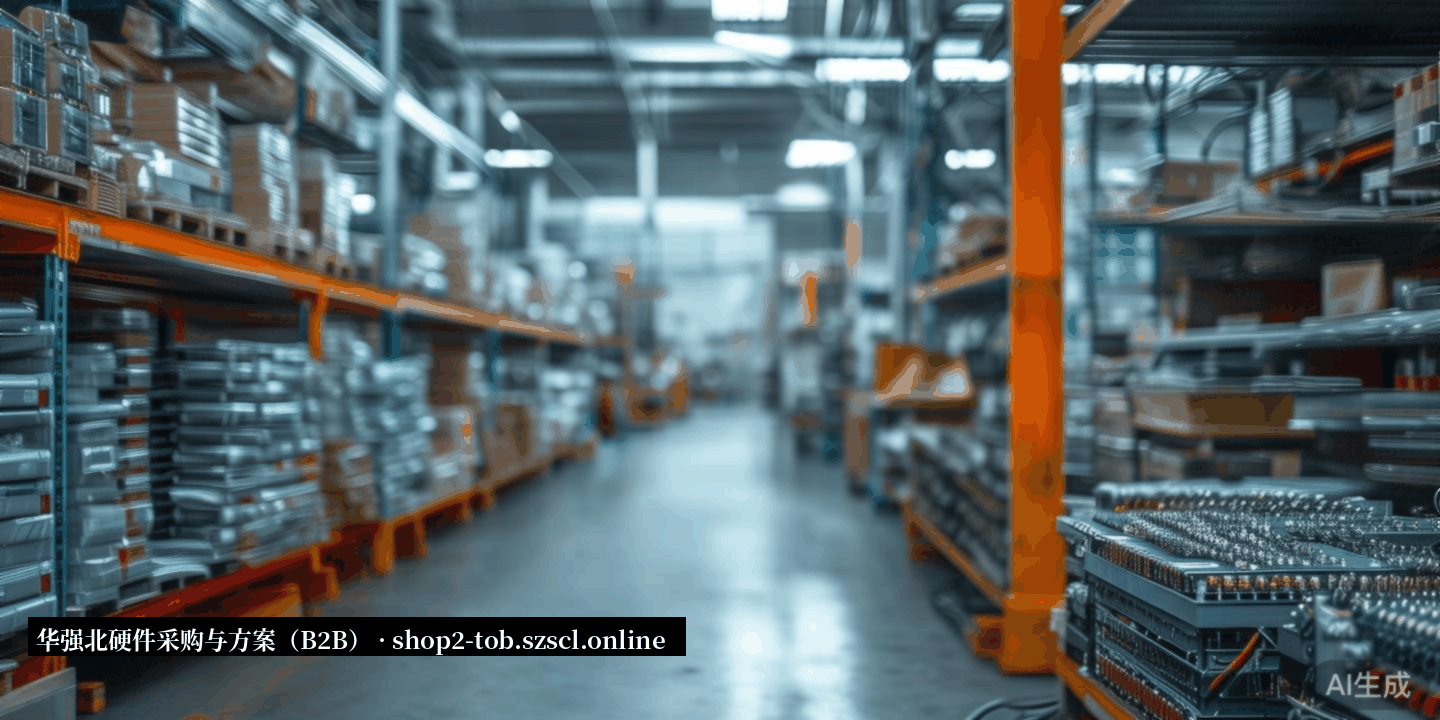
Dongguan Electronics Wholesale Supplier Verification Checklist Before Bulk Wire Transfer
TL;DR: Before wiring any deposit to a Dongguan IT-hardware wholesaler, run four checks in order: confirm the registered business entity and that the bank beneficiary name matches it exactly; verify the warehouse or production floor actually exists through a live video walkthrough or third-party inspection; test ready-stock claims with a paid sample pulled from the same batch you intend to buy; and lock in staged payment terms (typically 30% deposit, 70% after pre-shipment inspection). Suppliers who refuse batch traceability, push 100% upfront wires to unnamed personal accounts, or can’t quote tiered pricing for volume breaks are the ones most likely to disappear with your money.
Dongguan sits at the center of the Pearl River Delta electronics corridor. Between the component ecosystems around Chang’an, the logistics parks feeding the Shenzhen border crossings, and the R&D pull of the Songshan Lake zone, the city packs thousands of hardware distributors, stocking traders, and consolidation warehouses into a small geographic footprint. For a bulk buyer of server CPUs, RDIMM, SSDs, or network transceivers, that density means fast sourcing and weekly restock cycles — but it also means the market is thick with middlemen presenting themselves as stocking distributors. This checklist is built for wholesale IT-hardware buyers specifically: it covers what to verify before a bank transfer, how to read packaging and quality grades, and which contract terms separate a real stocking partner from a pass-through broker.
Why Wholesale IT Hardware Demands Stricter Verification Than General Electronics
Consumer gadget sourcing usually fails loudly — a defective unit shows up immediately. Bulk server components fail quietly and expensively. A pallet of mislabeled engineering-sample CPUs or relabeled DDR4 sticks may pass a visual check and only surface problems during burn-in at your customer’s site, months after the wire has cleared. That’s why verification for IT hardware focuses on three things retail sourcing rarely touches:
- Batch integrity: every tray, reel, or sealed box in your order should trace to one original factory shipment lot, not a mix of returns and open-box stock.
- Grade honesty: wholesale quotes should state plainly whether memory is original sealed, refurbished with replaced SPDs, or pulled from decommissioned servers.
- Restock reliability: a distributor promising weekly restock on SKUs like DDR5 RDIMM or 25G transceivers must actually hold pipeline agreements, not just list whatever the market has today.
Our wholesale catalog is structured around those three principles, and we recommend holding any prospective Dongguan supplier to the same bar.
Step 1: Verify the Legal Entity and the Bank Account Before Anything Else
Registration checks
Request the supplier’s unified social credit code and pull the record on the National Enterprise Credit Information system. For a legitimate wholesaler in Dongguan, the registered scope should include electronics trading, distribution, or warehousing with import/export rights. Note the registered capital and establishment date — a company incorporated three months ago quoting container-level volumes deserves extra scrutiny.
The bank account match
The single most common fraud vector in China-based bulk sourcing is the beneficiary mismatch: the invoice carries Company A’s letterhead while the wire instructions point to a personal account or an unrelated entity. Insist that:
- The account name matches the business license character-for-character, in Chinese.
- The account is a corporate account at a mainland bank, never an individual or Hong Kong personal account offered as a “convenience.”
- Any change to wire details after the first payment triggers a video call confirmation, not just an email or WeChat message.
Invoice fraud via compromised messaging apps is common enough that this rule alone prevents the majority of losses.
Step 2: Audit the Stock, Not Just the Company
A trade license tells you a company exists; it says nothing about whether the 500 units of Xeon CPUs on the quote are sitting in a Dongguan warehouse or will be scattershot-purchased from Huaqiangbei counters after your deposit lands. Verify actual stocking capability:
- Live video walkthrough: ask the supplier to walk the warehouse on camera, open a random tray of the exact SKU you’re buying, and show lot codes. Photos more than a few weeks old don’t count.
- Third-party inspection: firms in the Greater Bay Area can dispatch an inspector to a Dongguan address within 24–48 hours for a modest fee. For first orders above roughly USD 20,000, this is cheap insurance.
- Sample from the same batch: request a paid sample pulled from the lot you’ll receive — not a “demo unit.” Test serial numbers against the factory database where applicable, check original seals, and run stress or aging tests before releasing the balance payment.
- Restock evidence: for SKUs you plan to reorder weekly, ask for recent inbound shipping documents or ask how they handle allocation when upstream supply tightens.
If a supplier refuses a video walkthrough or claims “warehouse is in a restricted zone,” treat it as a red flag. Legitimate stocking distributors in Dongguan and Shenzhen do these walkthroughs daily.
Step 3: Interrogate Packaging, Grades, and Testing Standards
Wholesale IT hardware pricing varies enormously by packaging format and grade, and quoting ambiguities are where bad suppliers hide. Before transferring funds, get written answers to:
- Tray vs. retail box: server CPUs ship in trays; consumer CPUs in boxes. Mixed formats in one order signal consolidation from multiple upstream sources — acceptable if disclosed, a problem if not.
- Reel and seal condition for memory and SSDs: original factory sealing with intact anti-static packaging, or disclosed refurbished with warranty terms attached.
- Testing protocol: what exactly was tested (memory passes at full rated speed? SSDs health-checked for TBW and bad blocks? transceivers bit-error-rate tested?), on what equipment, and with what documentation per batch.
- Grade definitions in writing: “original new,” “refurbished,” and “pulled” must be defined in the proforma invoice, because these words mean different things to different sellers.
For an example of how this transparency looks in practice, see our Intel Xeon Gold 6338 server CPU listing, which specifies packaging format, stepping, and warranty coverage up front.
Step 4: Lock Volume Pricing and Consolidation Terms in the Proforma Invoice
Wholesale economics depend on tiered pricing and mixed-pallet consolidation, so both must appear in the PI — not just in chat messages. Confirm before wiring:
- Volume breaks: unit prices at 10 / 50 / 100 / 500-piece tiers, with the tier your current order qualifies for stated explicitly.
- Restock pricing validity: how long quoted tiers hold, and whether weekly restock orders inherit the same pricing or requote.
- Consolidation: if you’re mixing CPUs, RDIMM, drives, and transceivers into one pallet, who does the repacking, how is each line labeled for customs, and who bears the cost of repack materials.
- Incoterms and export docs: FOB Shenzhen or Yantian, with commercial invoice, packing list, and any CE/RoHS documentation your market requires.
A distributor who resists putting tiers and consolidation terms in writing is telling you something about how disputes will go later.
Step 5: RMA and Warranty Terms — Read These Before the Wire, Not After
This is where wholesale hardware deals most often break down. Get the RMA policy documented in the contract or PI:
- DOA window: typically 7–30 days from arrival for dead-on-arrival replacement at supplier’s freight cost.
- Warranty duration by category: 12 months is standard for original-new CPUs and memory; refurbished stock often carries 90 days. Anything less should be priced accordingly.
- RMA process and turnaround: who pays return freight to Dongguan, replacement-vs-credit policy, and target resolution time.
- Exclusions: physical damage, burned pins, and tampered labels are universally excluded — know the boundaries so inbound QC at your end aligns with claim eligibility.
If warranty terms are vague or only verbal, negotiate them before payment while you still have leverage.
Step 6: Structure the Payment to Protect the Balance
Even with a fully verified supplier, payment structure is your last line of defense. The standard wholesale pattern that works:
- 30% deposit to initiate picking and consolidation.
- 70% balance released only after pre-shipment inspection passes — either your inspector or a third party.
- For repeat partners with clean history, net terms or reduced deposits can follow after 2–3 successful cycles.
Pressure to wire 100% upfront “to lock stock” is a hard stop. Real stocking distributors hold inventory as their business model; they don’t need your full payment to reserve a pallet that’s already on their shelf.
Quick-Reference Checklist
- Business license verified; scope matches wholesale trading or distribution
- Corporate bank account, beneficiary name matches license exactly
- Live warehouse video or third-party inspection completed
- Sample tested from the actual shipment batch; lot codes confirmed
- Packaging format (tray/reel/retail) and grade disclosed in the PI
- Tiered pricing and consolidation terms documented
- RMA windows, warranty duration, and exclusions in writing
- 30/70 payment with pre-shipment inspection clause agreed
FAQ
Can I buy a small trial lot from a Dongguan wholesaler before committing to container volume?
Yes, and you should. Most stocking distributors accept trial orders of 10–50 units per SKU precisely to win long-term restock business. A trial lot with full inspection costs a fraction of one bad bulk wire.
Is a business license screenshot enough verification?
No. Licenses are easy to screenshot from legitimate companies or forge entirely. Pair document checks with the bank-account match, a live walkthrough, and batch-level sample testing before any transfer.
What if the supplier offers a lower price for 100% prepayment?
The discount rarely compensates for the risk. If the price gap versus 30/70 terms is large enough to tempt you, treat it as evidence the supplier’s cash position or stock claims are shaky — verify harder, not less.
How fast should a Dongguan supplier be able to restock weekly?
For mainstream SKUs (common Xeon/Ryzen CPUs, DDR4/DDR5 RDIMM, enterprise SSDs), 3–7 days from PO to ex-warehouse is realistic when stock is genuinely held locally. Longer lead times usually mean upstream sourcing from Shenzhen markets, which is workable but should be disclosed.
Running this checklist takes two to three days on a first-order supplier and removes the majority of wire-transfer risk in the Dongguan corridor. To see how disclosed grades, tiered pricing, and documented warranty terms look on real wholesale listings, browse our full catalog or read more sourcing guides on the blog. For a quote on bulk server components with inspection-gated terms, reach us via the contact page.

